
2026 Subaru Outback vs 2026 Mazda CX-50
Welcome to Southern States Subaru
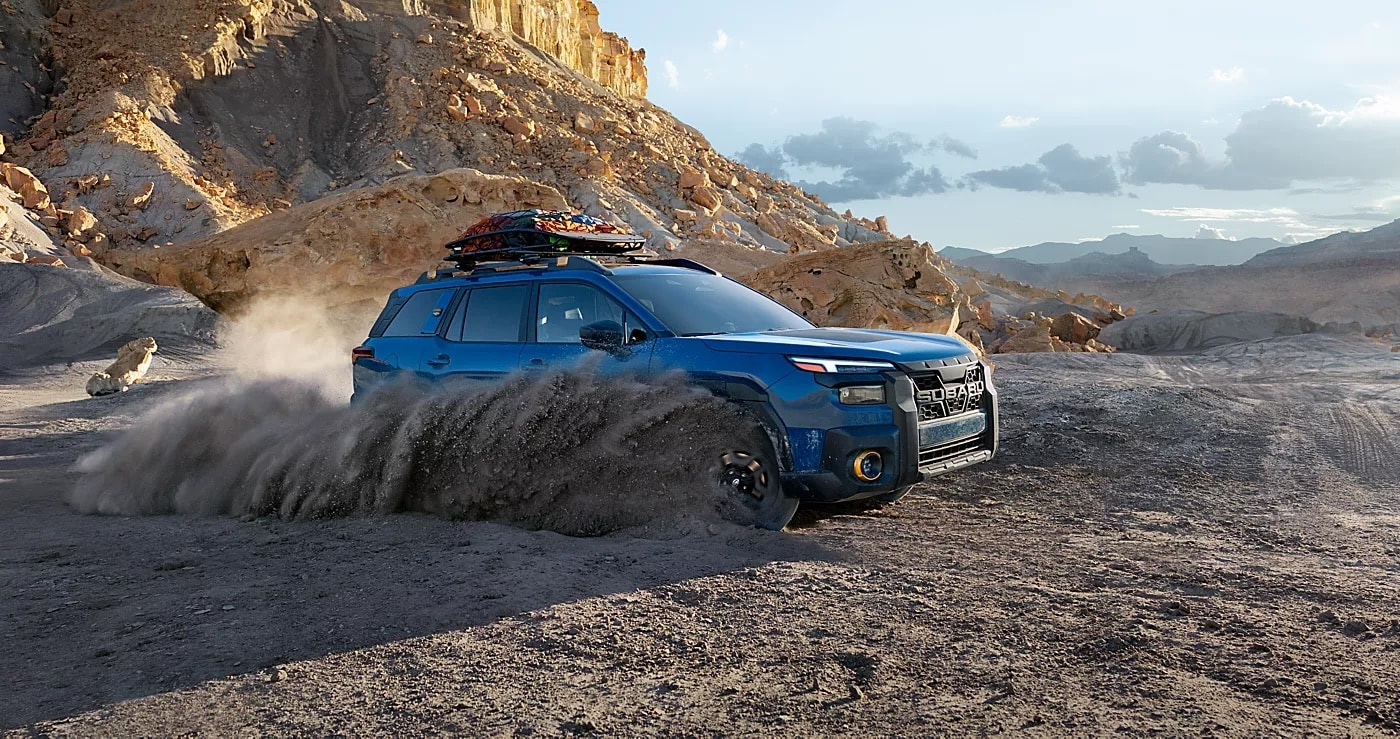

The midsize crossover segment remains one of the most competitive arenas in the automotive world, and for 2026, two of the most distinct options continue to be the Subaru Outback and the Mazda CX-50. While both vehicles cater to drivers who want more than a standard suburban commuter, they approach the concept of "adventure" from very different angles.
The 2026 Subaru Outback remains the gold standard for those who prioritize rugged utility, ground clearance, and a soft, compliant ride. On the other hand, the 2026 Mazda CX-50 is built for the driver who wants a rugged aesthetic paired with the sharp handling and premium interior craftsmanship Mazda is known for.
This comparison breaks down the performance, interior technology, off-road capabilities, and safety features of both models to help you decide which is the right fit for your driveway.
Performance and Powertrain Options
Subaru has refined the 2026 Outback to offer a balance of efficiency and steady power. Most trims come standard with the 2.5-liter SUBARU BOXER four-cylinder engine. This engine is designed for reliability and smooth power delivery, making it ideal for daily commuting and long-distance highway cruising. For those who need more passing power or frequently haul heavy gear, the available 2.4-liter turbocharged BOXER engine provides a significant boost in torque and horsepower. Every Outback comes standard with Subaru's Symmetrical All-Wheel Drive and a Lineartronic CVT, which has been further tuned for 2026 to reduce noise and improve responsiveness.
Mazda takes a different approach with the CX-50. The base powertrain is a 2.5-liter naturally aspirated four-cylinder, but the CX-50 truly shines with its available 2.5-liter Turbo engine. Mazda's turbocharging technology is designed to provide immediate low-end torque, giving the CX-50 a punchy, athletic feel that is rare in this segment. Unlike the Subaru's CVT, Mazda utilizes a traditional six-speed automatic transmission. This choice appeals to driving enthusiasts who prefer the distinct feel of gear shifts over the seamless but sometimes monotonous feel of a CVT.
Driving Dynamics: Comfort vs. Sport
The driving experience is where these two vehicles diverge most sharply. The Subaru Outback utilizes a car-based platform with a long wheelbase and a suspension system tuned specifically for comfort. It soaks up potholes and gravel road washboards with ease. The steering is light and easy to maneuver in parking lots, though it lacks the communicative feel found in more sport-oriented crossovers.
The Mazda CX-50 is engineered for engagement. It features a wider stance and a firmer suspension than the Outback. When you take the CX-50 through a winding mountain road, it feels planted and precise. Mazda's G-Vectoring Control Plus subtly adjusts engine torque and braking to make the vehicle feel more stable during cornering. If you enjoy the act of driving and want a vehicle that feels connected to the road, the CX-50 is the clear winner. However, if your priority is a "cloud-like" ride that isolates you from road imperfections, the Outback is hard to beat.
Off-Road Capability and Ground Clearance
For many buyers, the choice between these two comes down to how they handle the trail. The 2026 Subaru Outback offers 8.7 inches of ground clearance as a standard feature, which jumps to an impressive 9.5 inches on the Wilderness trim. This height, combined with standard X-MODE, allows the Outback to navigate deep snow, mud, and rutted trails that would stop most other crossovers. The X-MODE system optimizes engine output and all-wheel-drive engagement while also providing Hill Descent Control.
The Mazda CX-50 was the first Mazda designed with serious off-roading in mind. It offers a dedicated Off-Road mode that recalibrates the AWD system and traction control. While it is highly capable on forest service roads and dirt paths, it generally sits lower than the Outback, with ground clearance typically hovering around 8.6 inches. The CX-50 is more than enough for the "weekend warrior" who visits trailheads or campsites, but for those who intend to push deep into the backcountry, the Outback's superior clearance and specialized Wilderness equipment provide a higher ceiling of capability.
Interior Design and Material Quality
Inside the cabin, the two vehicles feel like they belong to different classes. The 2026 Subaru Outback is designed for durability and ease of use. The materials are high-quality but chosen for their ability to withstand mud, pet hair, and the general wear and tear of an active lifestyle. Higher trims offer Nappa leather, but even the base models feel substantial. The layout is dominated by the 11.6-inch STARLINK multimedia touchscreen, which controls everything from climate to navigation.
The Mazda CX-50 interior feels like a luxury vehicle. Mazda has mastered the art of "human-centric" design, featuring a driver-focused cockpit, high-end stitching, and materials that look and feel expensive. The infotainment system uses a 10.25-inch display that is primarily controlled via a rotary dial on the center console. This is a polarizing feature; some drivers find it safer and more intuitive than a touchscreen, while others prefer the direct interaction of a screen. For 2026, Mazda has updated the software to be faster and more compatible with wireless smartphone integration.
Cargo Space and Practicality
Practicality is a hallmark of the midsize crossover, and both models offer clever solutions for hauling gear. The Subaru Outback features a wagon-like body style that provides a long, flat load floor. It offers approximately 32.6 cubic feet of space behind the rear seats and up to 75.6 cubic feet with the seats folded down. One of the Outback's best features is its integrated roof rails with crossbars that swing out when needed and tuck away when not in use to improve aerodynamics.
The Mazda CX-50 offers a slightly different cargo profile. Its cargo area is deep and wide, designed specifically to make loading coolers and camping bins easier. While its total volume is slightly less than the Outback-coming in at roughly 31.4 cubic feet with seats up and 56.3 cubic feet with them folded-it feels more spacious than the numbers suggest due to the clever packaging. The CX-50 also features high-strength roof rails designed to support heavy loads like rooftop tents, catering to the overlanding community.
Safety Technology and Driver Assistance
Both Subaru and Mazda consistently earn top marks from safety organizations, and the 2026 models are no exception. The Outback comes standard with the latest version of Subaru EyeSight Driver Assist Technology. This system includes two cameras that monitor traffic movement, optimize cruise control, and warn you when you're swaying outside your lane. For 2026, the system has been updated with a Wide-Angle Mono Camera that helps detect pedestrians and cyclists sooner at intersections.
Mazda's i-Activsense suite is equally comprehensive. Standard features include Smart Brake Support, Blind Spot Monitoring, and Rear Cross Traffic Alert. One standout feature in the CX-50 is the available 360-degree View Monitor, which is incredibly helpful when navigating tight trails or crowded parking lots. Mazda's approach to safety is often less intrusive than Subaru's; where the Outback might provide frequent audible beeps, the CX-50 uses more subtle haptic feedback and head-up display alerts.
Fuel Efficiency and Environmental Impact
As the automotive industry shifts toward electrification, both models are making strides in efficiency. The standard Subaru Outback achieves competitive fuel economy for an all-wheel-drive vehicle, typically averaging around 26 mpg city and 32 mpg highway. The turbocharged models see a slight dip but remain efficient for their power output.
The Mazda CX-50 performs similarly with its base engine. However, for 2026, many eyes are on the CX-50 Hybrid. By utilizing advanced hybrid technology, Mazda is able to offer significantly higher city fuel economy without sacrificing the driving dynamics that define the brand. For buyers who spend a lot of time in stop-and-go traffic but still want a rugged vehicle for the weekend, the CX-50 Hybrid is an attractive alternative.
Choosing the Right Crossover for Your Lifestyle
Deciding between the 2026 Subaru Outback and the 2026 Mazda CX-50 ultimately depends on your daily routine and your aesthetic preferences.
You should choose the Subaru Outback if you prioritize ride comfort and maximum utility. Its higher ground clearance and legendary all-wheel-drive system make it the better choice for those living in areas with heavy snowfall or for those who spend their weekends on unpaved roads. It is a "do-it-all" vehicle that focuses on making your life easier and more comfortable, regardless of the terrain.
You should choose the Mazda CX-50 if you want a vehicle that looks as good as it drives. If your commute involves winding roads and you appreciate a cabin that feels premium and curated, the CX-50 is the superior choice. It offers enough ruggedness to handle the vast majority of outdoor activities while providing a more sophisticated and engaging experience behind the wheel.
Final Thoughts on the 2026 Models
The 2026 Subaru Outback and 2026 Mazda CX-50 represent the pinnacle of their respective philosophies. Subaru continues to refine the formula that has made the Outback a household name for decades: safety, space, and go-anywhere capability. Mazda has successfully carved out a niche for the driver who wants that same adventurous spirit but refuses to compromise on style or performance.
Regardless of which path you take, both vehicles offer incredible reliability, strong resale value, and the latest in automotive technology. The best way to make a final decision is to get behind the wheel of both. Feel how the Outback glides over the pavement and how the CX-50 grips the corners. Your choice will likely become clear the moment you hit the road.
Frequently Asked Questions
Which has better towing capacity? The Mazda CX-50 Turbo models typically offer a towing capacity of up to 3,500 pounds, which is slightly higher than the standard Subaru Outback. However, the Outback Wilderness and XT trims also offer a robust 3,500-pound rating, making them very competitive for hauling small trailers or boats.
Is the Subaru Outback or Mazda CX-50 better for families? Both are excellent, but the Outback offers a slightly more spacious feel in the rear seat, which can be a deciding factor for families with older children or those using bulky rear-facing car seats. The Outback's soft suspension also tends to be more comfortable for passengers on long road trips.
Does the 2026 Mazda CX-50 have a hybrid option? Yes, the 2026 lineup includes a hybrid powertrain designed to provide better fuel economy and smoother torque delivery, making it a strong competitor for those who want to reduce their fuel consumption without switching to a fully electric vehicle.
Which vehicle is better in the snow? Both are exceptional in winter conditions due to their standard all-wheel-drive systems. The Subaru Outback has a slight edge in deep snow due to its higher ground clearance and the specialized X-MODE system, but the Mazda CX-50 is incredibly stable on icy or slushy paved roads.
* Although every reasonable effort has been made to ensure the accuracy of the information contained on this site, absolute accuracy cannot be guaranteed. This site, and all information and materials appearing on it, are presented to the user "as is" without warranty of any kind, either express or implied, including but not limited to the implied warranties of merchantability, fitness for a particular purpose, title or non-infringement. All vehicles are subject to prior sale. Price does not include applicable tax, title, and license. Not responsible for typographical errors.
**The arrival timeline is an estimate. It may vary due to circumstances beyond Subaru’s or the retailer’s control.